Why the World’s Best Fishing Isn’t Found on the Map
Published on 09 Apr 2026
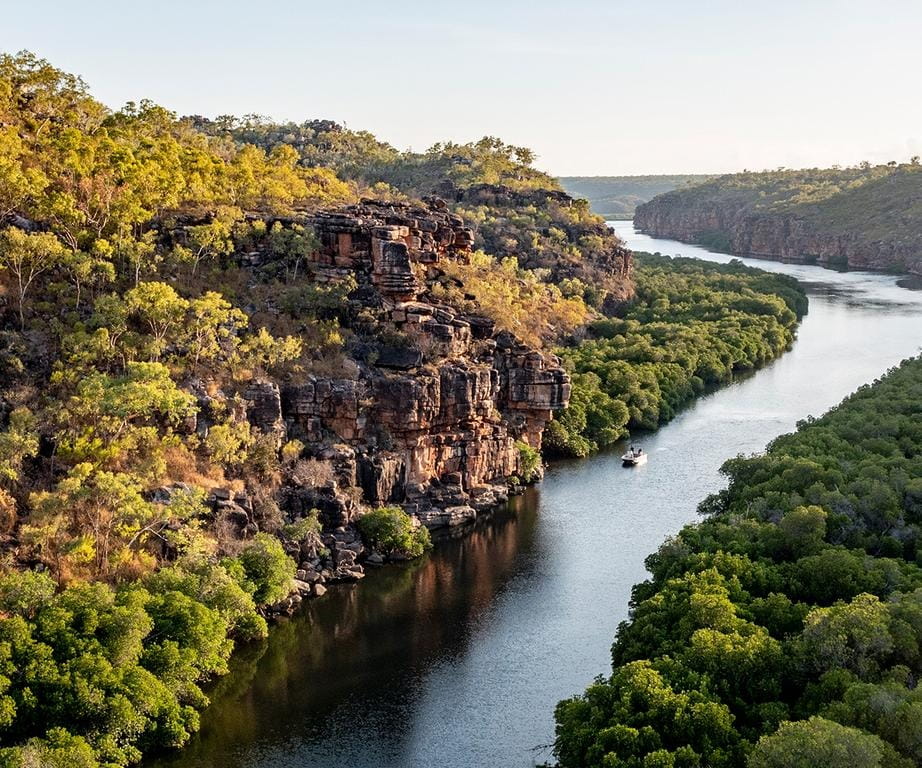
After decades chasing great water, many experienced fishers notice their priorities changing. It stops being about collecting famous destinations or casting into water you’ve already seen splashed across magazines. Instead, the focus turns towards experiences that feel earned, unpredictable, and alive with possibility.
The focus shifts away from well-known locations and towards the conditions that actually shape great fishing. What starts to matter most is water that still behaves naturally, influenced by tide, season and structure rather than easy access.
That kind of fishing doesn’t advertise itself. It isn’t neatly labelled. And it rarely sits at the end of a sealed road. Rather, it exists in vast tidal systems, remote coastlines and river networks that require range, judgement and local knowledge to unlock.
And that’s where the real conversation begins.
Great fishing stories rarely begin with: ‘We went to that famous spot.’ Rather, they begin with: ‘You wouldn’t believe where we ended up.’
There’s a simple reason for that. The easier a location is to reach, the more pressure it attracts. Roads appear. Boat ramps multiply. Photos spread online. Word travels fast, and fish numbers inevitably respond.
So serious anglers start looking further afield—beyond the sealed highways, beyond the marina limits, and beyond the coordinates that circulate in group chats and forums.
That’s where places like the Kimberley coast come into their own. Here, tidal movements can exceed 10 metres and landscapes stretch wild and roadless for hundreds of kilometres. Access remains limited. Pressure stays low. And ecosystems continue to function as they should.
But reaching water like this requires more than a standard charter. It requires range, flexibility and the ability to relocate with the tides. This is where expedition vessels such as True North operate differently.
Rather than heading to a fixed, well-known location, the ship moves with the conditions. Guests explore by tender through island mazes in the Buccaneer Archipelago, access remote river systems.
This is fishing where the map fades out.

Photo: Fishing Adventure
This is where remoteness becomes more than a backdrop and turns into your greatest advantage. When water remains difficult to access, it experiences far less pressure over time. Fewer boats operate in these systems, fewer lines are cast, and the natural rhythms of tide, temperature and season are allowed to unfold largely undisturbed.
The result is not just quieter waterways, but healthier ones. In Northern Australia’s remote coastal systems, the ecological health is unmistakable. You see it in the behaviour and presence of key species:
What ties this together is not chance. It is the result of ecosystems that still function as they have for thousands of years. These are not manufactured fisheries designed for volume. They are complex, self-sustaining systems shaped by ancient sandstone geology, dramatic tidal exchanges and seasonal freshwater flows that have operated this way for thousands of years.
Having navigated the Kimberley’s coast for more than 35 years, True North’s crew understands how these forces intersect. Abundance here isn’t accidental. It is protected by distance, by difficulty, and by the simple reality that access remains limited.
When you fish in regions like this, you’re not relying on reputation or nostalgia. You’re engaging with environments that have seen far fewer hooks. And that difference reveals itself not only in the quality of the strike, but in the integrity of the system itself.

Photo: Waterfall Escape
One morning, you might be casting into a mangrove creek as bait erupts along the edge of the tide. The next, a helicopter lift places you onto a stretch of river rarely fished, where the only sound is a barramundi breaking the surface.
Reaching water this isolated is only the beginning. In a region as vast and tide-driven as the Kimberley, simply arriving in the right postcode isn’t enough. Conditions change daily, tides rise and fall by metres, bait moves with the current, and predators move with it.
Consistent success in a landscape like this depends on two things: the ability to move, and the judgement to know when it’s time to do so. And this is exactly where True North sets itself apart.
Rather than fishing the same productive stretch day after day, the ships reposition to follow the most favourable conditions. Movements are timed around tidal windows, seasonal flows and shifting weather patterns, without the need to return to a fixed marina base each evening.
At first light, True North’s tenders slip into quiet tidal creeks and estuaries as bait begins to move with the flooding tide. As the current strengthens, guides adjust location and technique, shifting towards deeper channels or offshore structure.
When seasonal freshwater systems open inland, helicopters extend the reach even further, placing anglers onto water that sees little to no regular pressure.
And yet, even with all of that precision and movement, the fishing is only part of what unfolds out here.
Between casts, the landscape asserts itself. Sandstone escarpments glow ochre as the sun lowers. Sea eagles circle on rising thermals. Along the mudbanks, a saltwater crocodile slips quietly beneath the surface, leaving barely a ripple behind.
This is not a single-purpose trip designed around a hotspot. It’s deep immersion in a region where geology, wildlife and tidal forces shape every hour.
There will be moments when the rods are stowed and boots hit the ground. You might step ashore to walk beneath towering rock formations or learn about the cultural significance of the land from its Traditional Owners, with every visit undertaken respectfully and with permission.
Evenings will unfold just as memorably. You might find yourself enjoying freshly prepared mud crab on deck as the tide recedes across vast flats. Heat lightning may flicker on a distant horizon while conversation lingers long past sunset.
Fishing becomes one chapter in a far broader experience. Perhaps that is the real reason the world’s best fishing is rarely found on a map. It’s discovered in places where exploration still shapes the day, where wild systems remain intact, and where the story extends well beyond the catch itself.

Photo: Fishing Beyond the Map
The world’s most memorable fishing stories rarely begin at a famous coordinate. They begin in places reached by tide, by instinct, and by the quiet confidence of those who know the water well.
True North has spent more than 35 years navigating the Kimberley’s cliffs, creeks and coral systems, providing rare access to remote fisheries where fishing activity remains minimal, and opportunity runs deep. Every departure is centred around mobility, experience and the kind of exploration that transforms a fishing trip into something far more exciting and meaningful.
If you’re ready to experience fishing shaped by wild landscapes, guided by deep local knowledge and defined by access few others can offer, explore True North’s upcoming expeditions and discover what waits beyond the edge of the map.
Explore upcoming True North departures.
The Kimberley’s remote coastal and river systems are home to iconic Northern Australian species. Depending on the season and location, fishing enthusiasts may target barramundi, mangrove jack, giant trevally, Spanish mackerel, queenfish and mud crab. Offshore reef systems and estuaries each offer distinct opportunities, and the diversity of environments allows for varied techniques throughout the journey.
No, not at all. While many guests are seasoned anglers, the experience is designed to accommodate a range of skill levels. True North’s guides tailor sessions based on ability, preferred techniques and personal goals.
Operating in remote and ecologically sensitive regions requires a thoughtful approach. Fishing practices are guided by local regulations, seasonal awareness and a strong respect for marine ecosystems.
Catch limits and ethical handling are observed, and the mobility of the vessel reduces repeated pressure on any single location. The goal is to experience these fisheries without impacting their long-term health.
Fishing conditions in the Kimberley are closely linked to seasonal cycles. The dry season typically offers more stable weather and clearer access to offshore systems. Whereas transitional periods can produce dynamic tidal activity and strong estuary fishing. Because True North itineraries adapt to conditions, timing is aligned with seasonal patterns to maximise opportunity while maintaining safety and comfort.
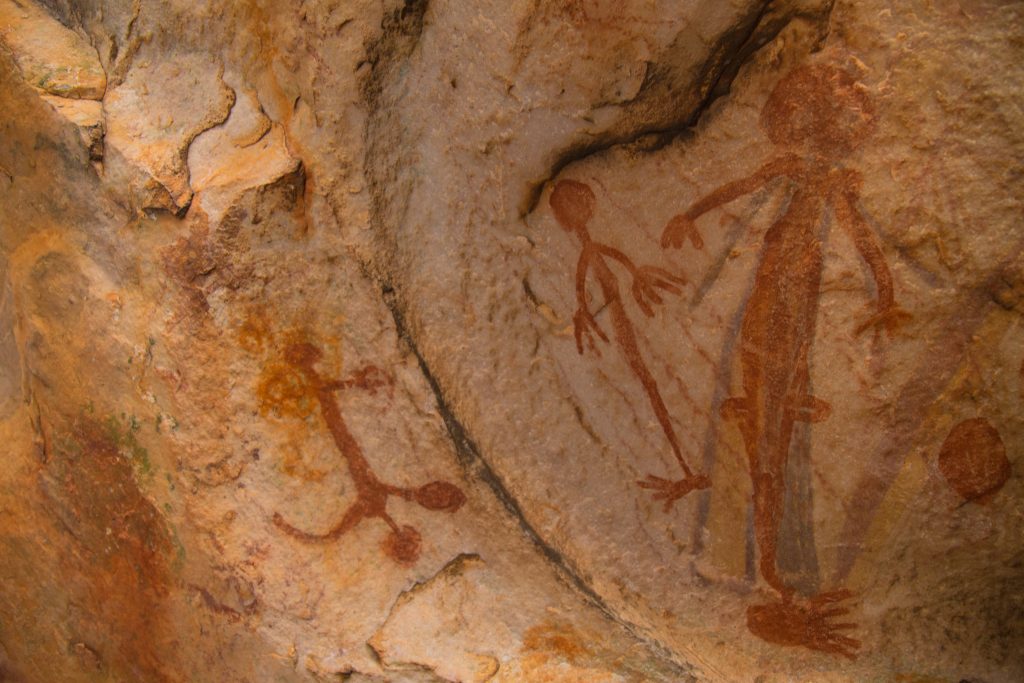
Swift Bay is the kind of place that makes you feel like an explorer. Cliffs tower over the water, rock shelters hide ancient art, and every turn feels like you’re discovering something new.
Read more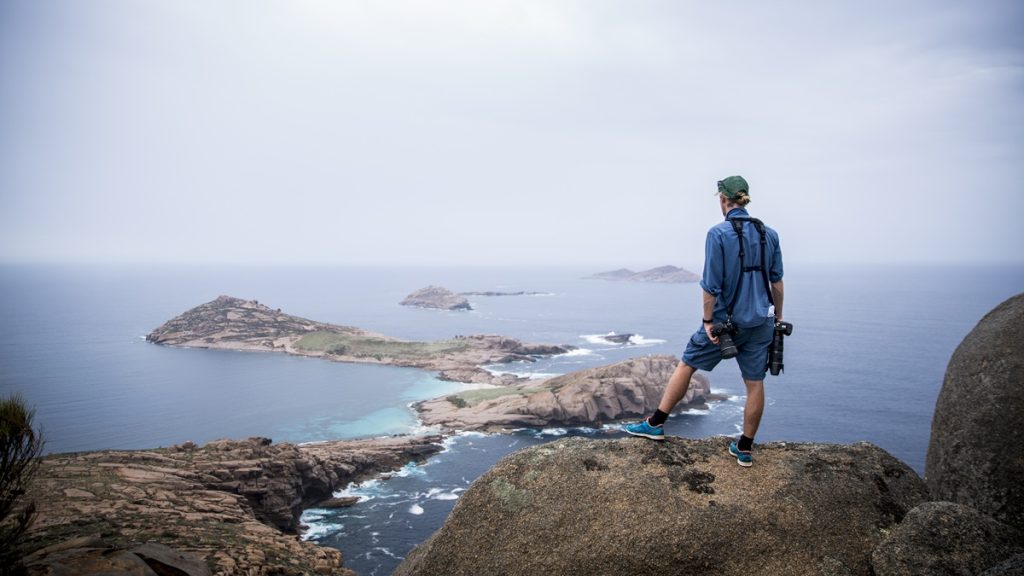
Great photography comes down to access. Being in the right place at the right time with the freedom to move. True North makes that possible.
Read more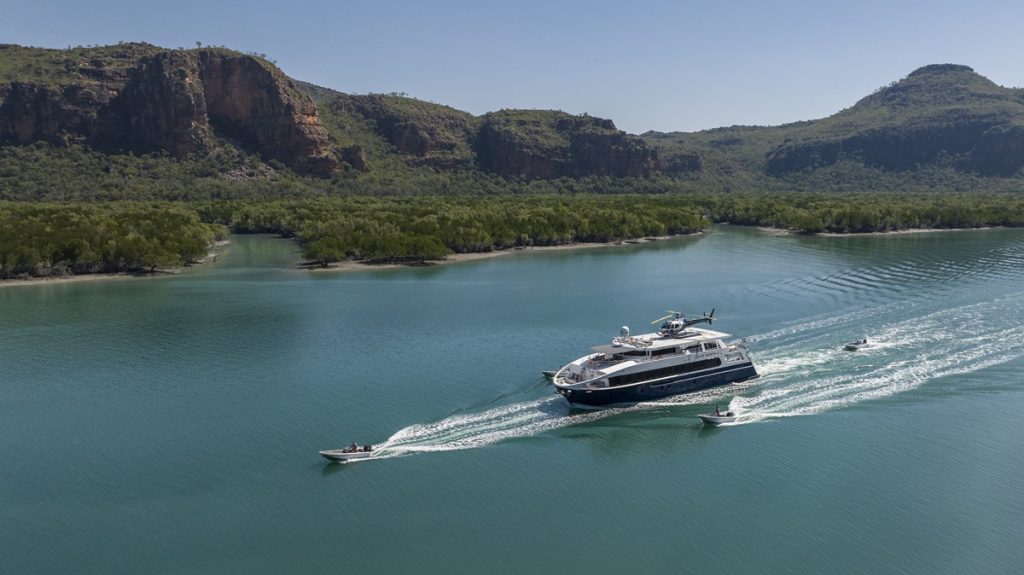
There’s no better way to take in the Kimberley than from the water. Towering cliffs, winding rivers, and waterfalls that spill straight into the sea—it’s all right there, just beyond the deck. The tide sh...
Read more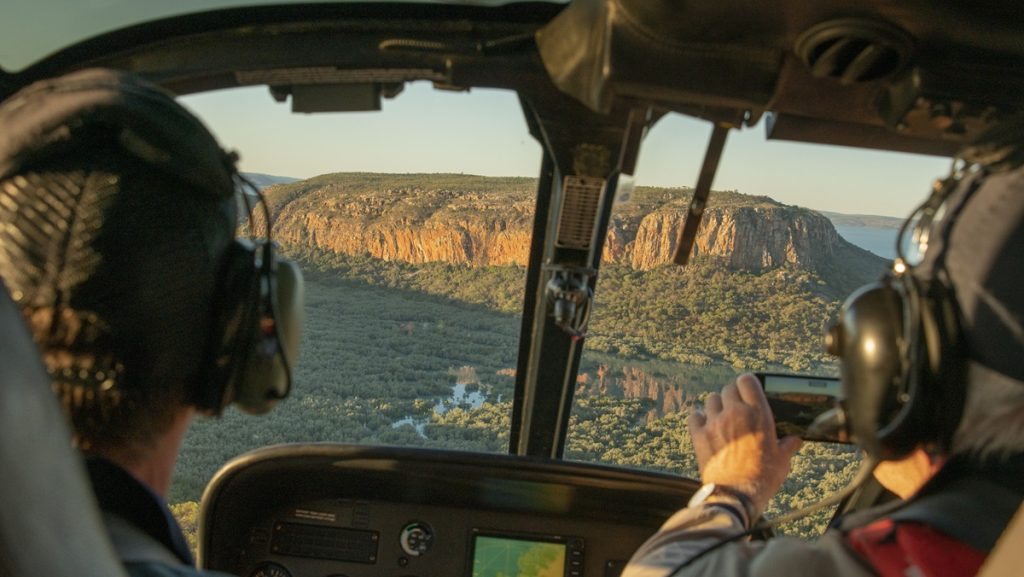
The Kimberley is vast, remote, and largely untouched. Not many people can say they have seen it from the air, but those who have know it offers a completely different perspective.
Read moreMontgomery Reef is one of those places that makes everyone say the same thing what is going on here? One minute, it’s just open ocean. Then, as the tide drops, the water starts rushing away, and this massive ...
Read more