The iconic boab trees of the Kimberley
Published on 23 Jan 2025
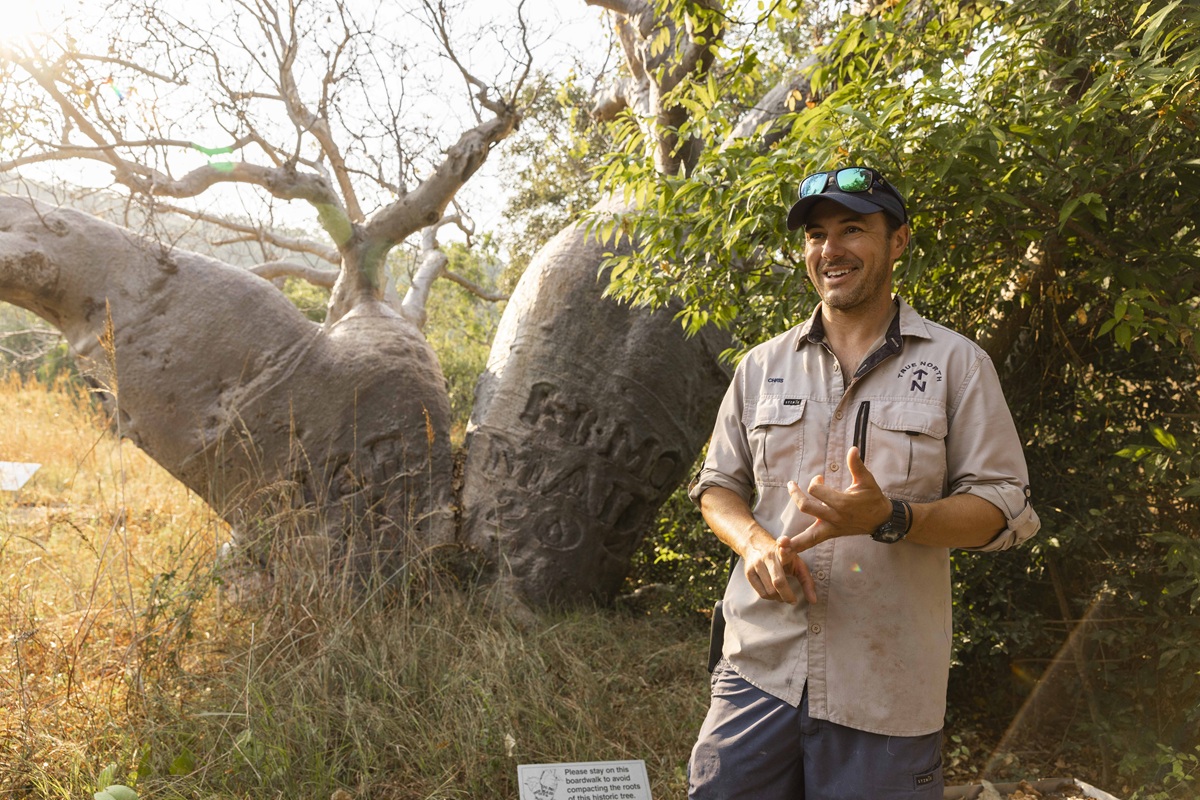
If trees had personalities, the boab trees of the Kimberley would be the quirky uncles at a family gathering—round, sturdy, and full of stories.
These iconic “bottle trees” stand proudly across the Kimberley landscape, their unique, swollen trunks and twisted branches looking like something straight out of a Dr. Seuss book. Some have been around for over a thousand years, quietly witnessing the comings and goings of history while storing water like nature’s very own camel.
But boabs aren’t just a visual spectacle; they’re deeply rooted in the cultural and ecological fabric of the Kimberley. From sheltering travellers to starring in ancient Aboriginal tales, these trees are more than just funky flora.
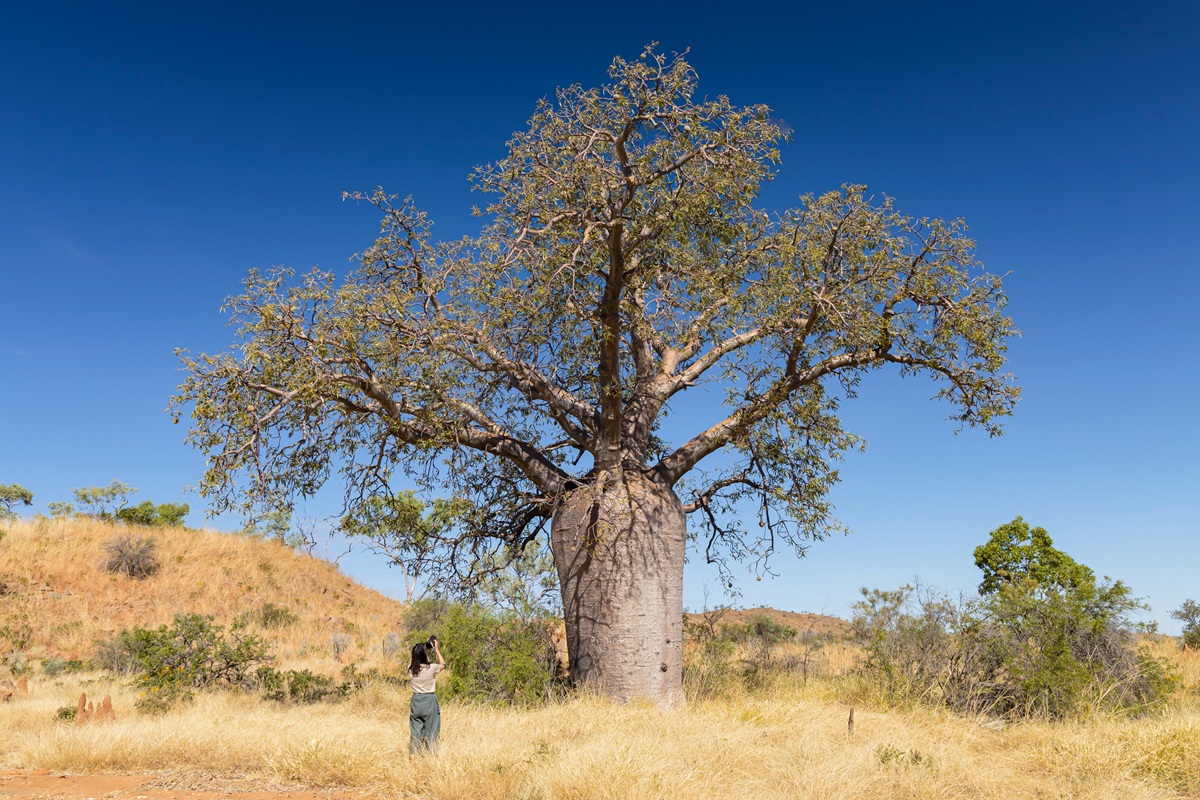 The boab tree (Adansonia gregorii) is one of the most iconic natural features of the Kimberley region in Western Australia. Known for their striking bottle-shaped trunks and sprawling branches, these trees are uniquely adapted to the region’s harsh climate. Their swollen trunks store water, enabling them to survive the Kimberley’s extended dry seasons.
Standing up to 15 metres tall with trunk circumferences reaching up to 20 metres, boab trees are living giants of the Australian outback. These ancient trees are deciduous, shedding their leaves during the dry season to conserve moisture. When the wet season arrives, they spring to life with vibrant green foliage and produce large, creamy-white flowers that bloom at night. These flowers are pollinated by hawk moths and bats, followed by the appearance of distinctive, velvety fruit that encases edible seeds.
While boabs share a genetic link to the baobabs of Africa and Madagascar, the Kimberley’s boab is found only in Australia, making it a botanical rarity. This extraordinary tree is an integral part of the Kimberley’s natural heritage, revered not only for its striking appearance but also for its resilience and vital role in the ecosystem.
Boab trees are found almost exclusively in the Kimberley region of Western Australia, with their range extending into the western part of the Northern Territory near the Victoria and Fitzmaurice Rivers. This restricted distribution makes the Kimberley the heartland of the boab and reinforces its status as a regional icon.
These unique trees thrive in a variety of landscapes, from rugged sandstone hillsides and sandy plains to basalt slopes and limestone ridges. They are often found near water sources such as creeks and lagoons, where their water-storing trunks are well-suited to the arid and semi-arid conditions.
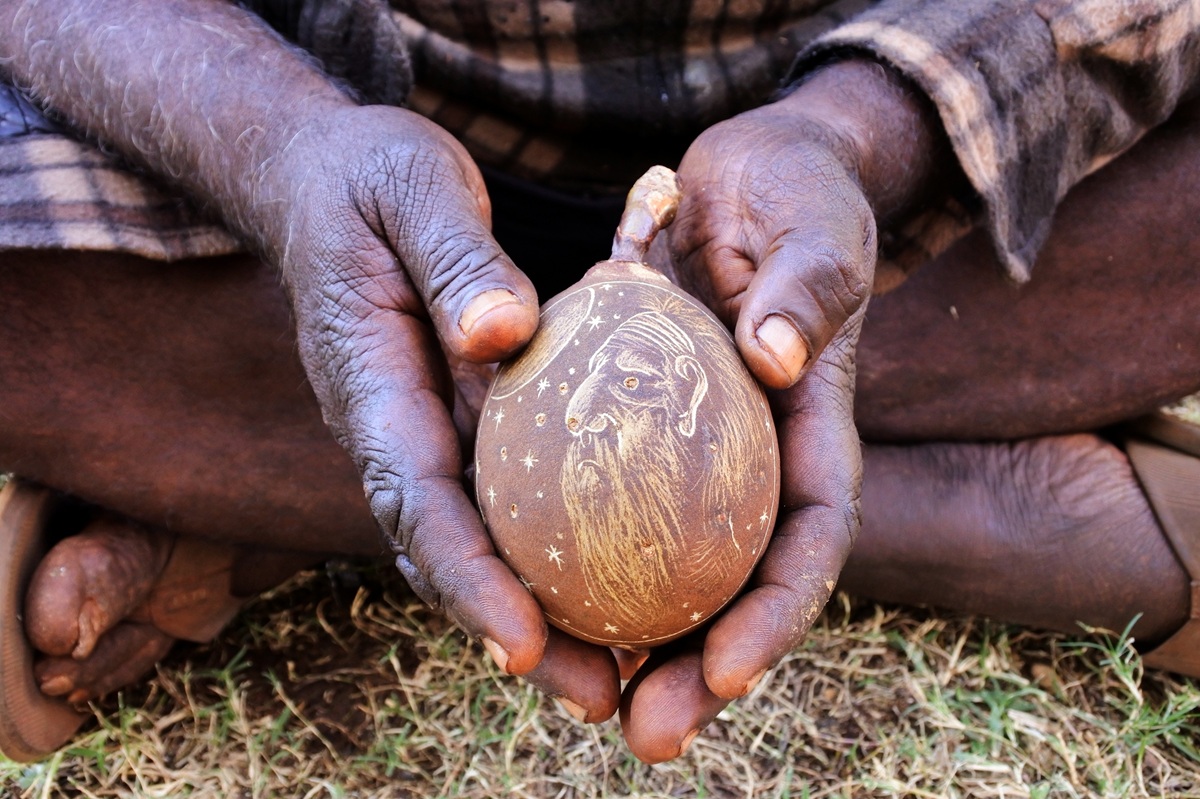
 For thousands of years, the boab tree has been deeply intertwined with the cultural and practical lives of the Indigenous peoples of the Kimberley. Aboriginal groups have long relied on boabs as a vital resource, using their fibrous trunks to source water, their seeds and leaves for food, and their bark for medicinal purposes. Some ancient boabs also served as natural shelters, their hollow trunks providing refuge from the elements. Beyond their utility, these trees hold spiritual and cultural significance, featuring prominently in Aboriginal art, stories, and songlines that connect people to the land.
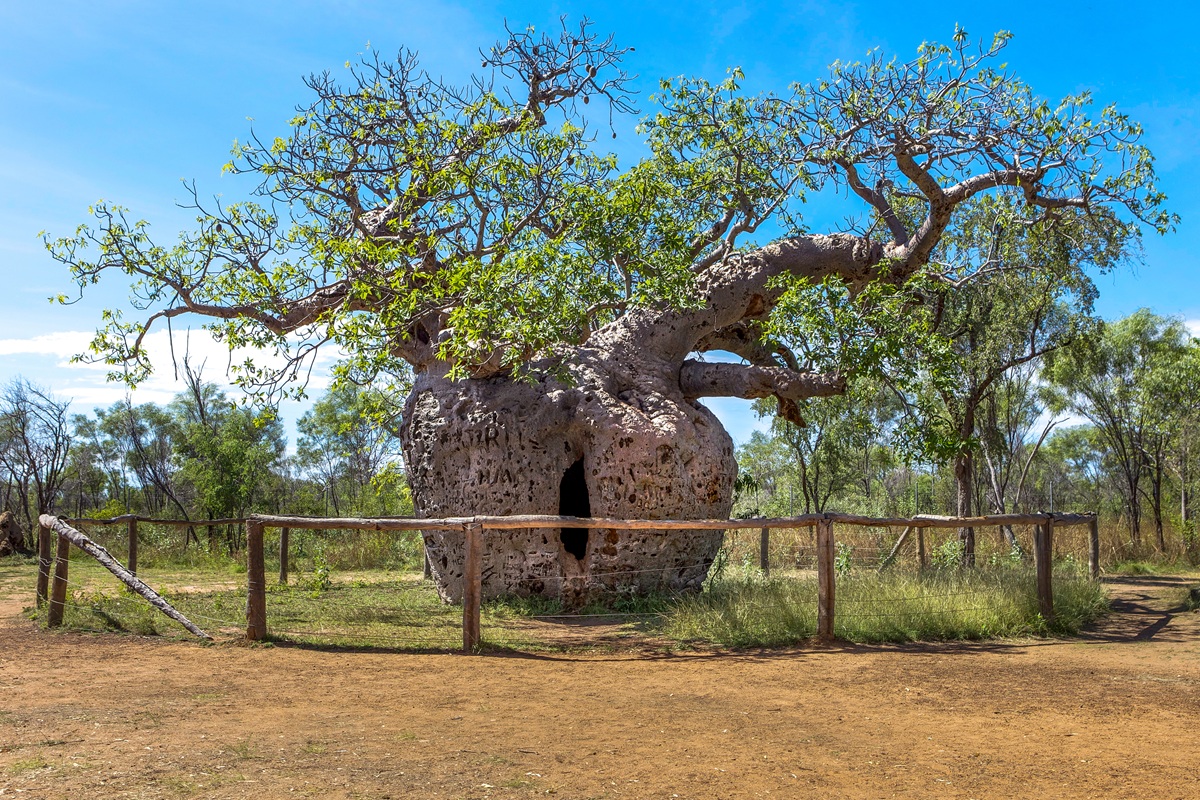
When European settlers arrived, boabs became landmarks and meeting points across the vast Kimberley landscape. One of the most famous examples is the Boab Prison Tree near Derby. Believed to be over 1,500 years old, this hollowed-out giant was reportedly used as a temporary holding cell for Indigenous prisoners during the colonial era—a poignant reminder of the darker chapters in Australia’s history.
Learn more about cultural experiences on the True North.
 The origins of the boab tree in Australia are steeped in mystery, with two leading theories attempting to explain their arrival in the Kimberley region.
The first theory suggests that boabs are a remnant of the ancient supercontinent Gondwana. Over 100 million years ago, Australia, Africa, and Madagascar were part of this vast landmass. As Gondwana split apart, the boab’s ancestors are believed to have evolved separately, adapting to the Kimberley’s unique conditions over millions of years.
The second theory posits that the boab’s seeds were carried to Australia from Africa via ocean currents. The tree’s close genetic ties to African and Madagascan baobabs support this idea, with the seeds potentially surviving long sea journeys thanks to their buoyant, protective pods.
More recent studies propose an intriguing alternative: that humans may have introduced boab seeds to Australia. Early human migrations out of Africa around 70,000 years ago might have brought the seeds as a valuable food source.
To truly appreciate the stories behind these ancient giants and the land they call home, there’s no better way than embarking on a Kimberley cruise. Journey through this awe-inspiring region, learn from Traditional Owners about their enduring cultural ties, and explore the breathtaking landscapes where these iconic trees thrive.
Look at our future itineraries today and book your Kimberley adventure—it’s time to experience the region’s remarkable heritage for yourself
There are moments in travel that feel bigger than any single destination. Moments that are shaped not by the map beneath your feet, but by the sky above you.
Read more
After decades chasing great water, many experienced fishers notice their priorities changing. It stops being about collecting famous destinations or casting into water you’ve already seen splashed across maga...
Read more
Luxury travel is evolving, with greater emphasis on experience and access. In 2026, travellers are no longer chasing shiny excess or ticking off famous bucket list sights just because they’re popular. Instead...
Read more
Travelling solo offers a rare kind of focus. There are no compromises to negotiate, no competing preferences to consider. Just time, space and a destination that invites deeper attention.
Read more
You know that feeling when you're at a crowded tourist attraction, jostling for space with hundreds of others, waiting in line for what feels like forever, and you think, ‘There has to be a better way to trav...
Read more