Realm of the Four Kings: Journey to Raja Ampat’s Last Wild Places
Published on 17 Feb 2026
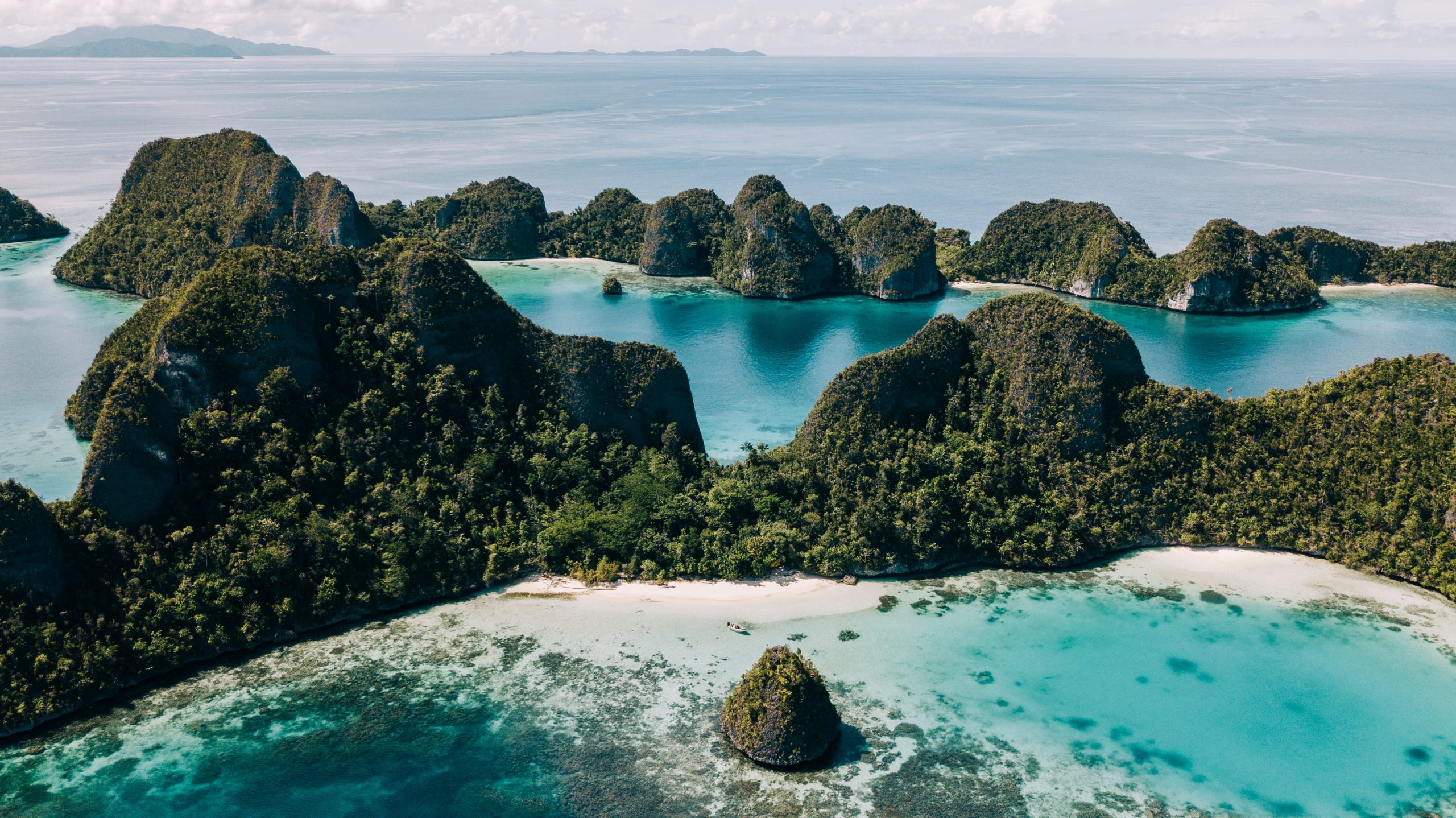
In Indonesia’s far east, where jungle-covered islands scatter across a glowing turquoise sea, lies one of the last truly wild marine frontiers. Raja Ampat, The Four Kings, is a name rooted in myth, but also in place. It speaks of ancient island kingdoms and of four main islands that anchor this untouched archipelago: Waigeo, Batanta, Salawati, and Misool.
This is not a region you happen upon. There are no big ports, few signs of infrastructure, and no rush. Instead, coral blooms in every direction, and manta rays sweep across the reef. In quiet anchorages, the rainforest hums with life. Raja Ampat is a destination that rewards those willing to go further, and one best explored by expedition ship.
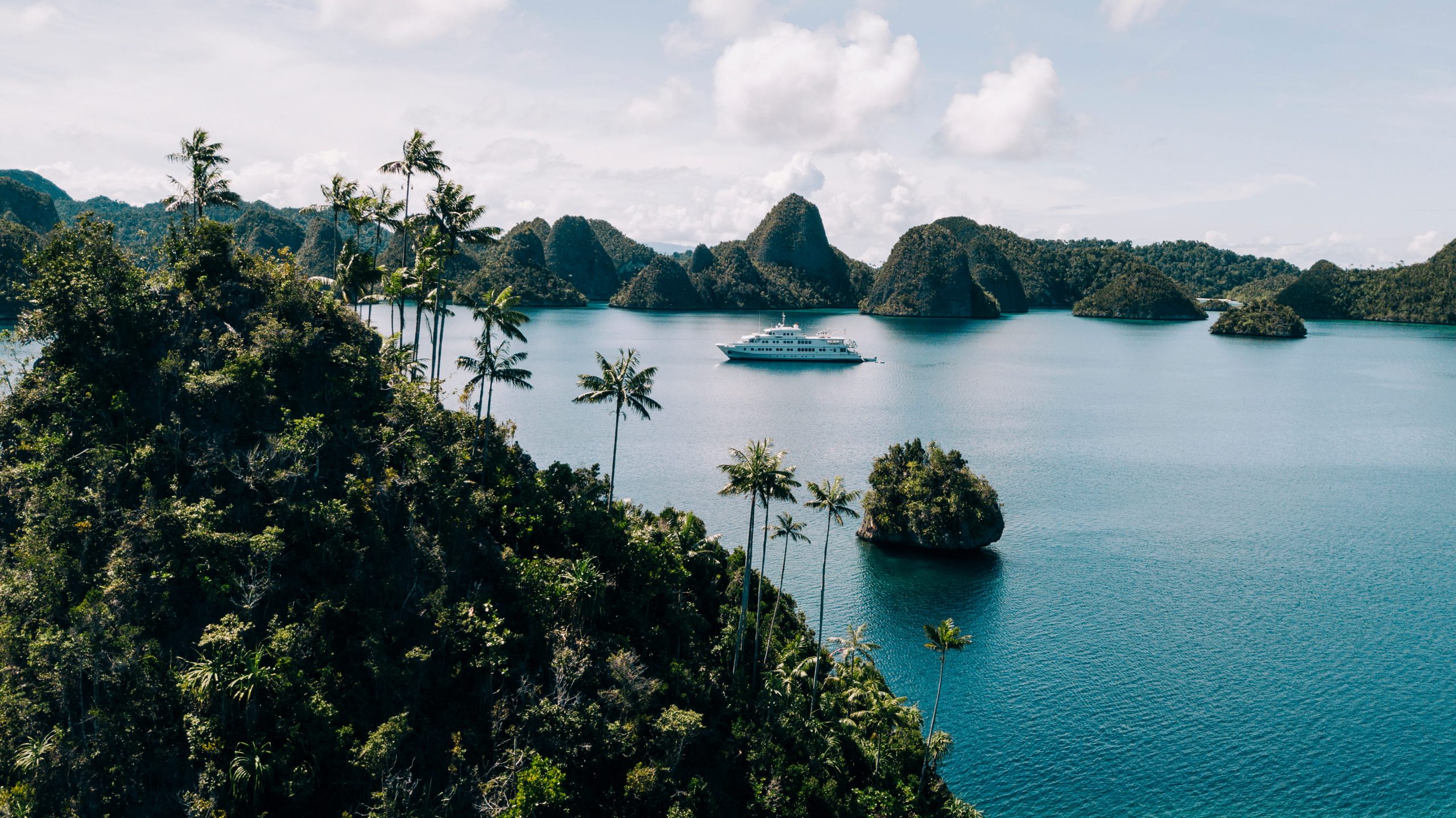
According to local oral tradition, a woman discovered seven eggs in the forest. Four of them hatched into kings, destined to rule the islands that now form the heart of Raja Ampat. The remaining eggs became a woman, a ghost, and a stone, symbols of balance and connection between sea, spirit, and land.
Each of the Four Kings, Waigeo, Batanta, Salawati, and Misool, holds a distinct ecological character. Waigeo and Batanta lie in the north, forested and expansive. Salawati sits just off the Papuan mainland. Misool, to the south, is a limestone labyrinth of coral-fringed islets and hidden lagoons.
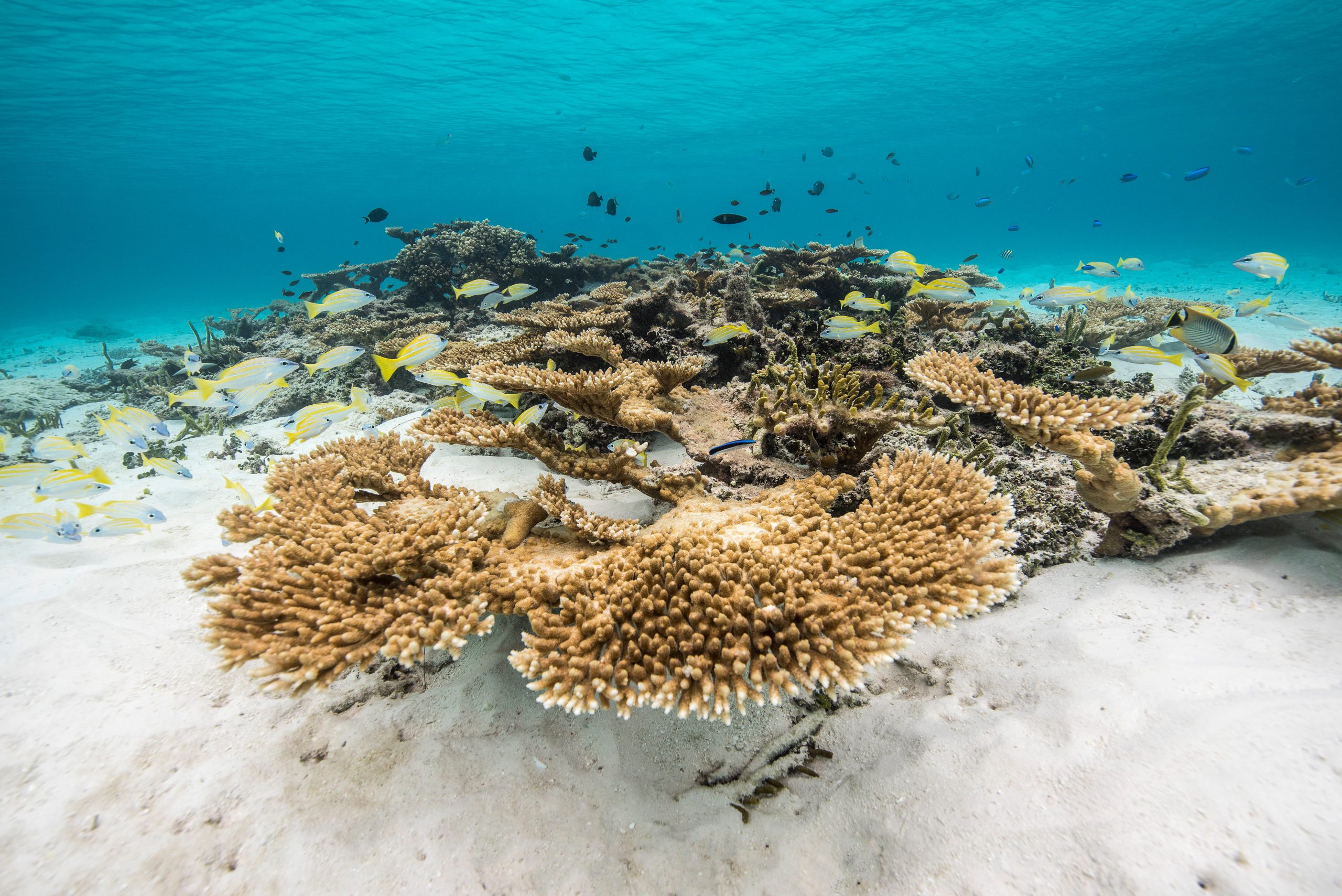
Raja Ampat lies within the Coral Triangle, the most biologically diverse marine region on Earth. In this one remote cluster of islands, you’ll find:
What defines Raja Ampat isn’t just the sheer variety; it’s the density. Pygmy seahorses cling to sea fans. Wobbegong sharks lie camouflaged under coral ledges. Manta rays cruise between cleaning stations. Life is everywhere, all at once.
Visibility often exceeds 25 metres. Reefs rise just below the surface and plunge into the blue. One dive might focus on intricate macro life, the next on large schools of pelagic fish. Every site feels alive, and no two feel the same.
Not far from Misool lies a dive site that shares its name with the region, and distils its energy into a single location.
The Raja Ampat dive site is made up of four towering coral pinnacles. Each is cloaked in soft corals and sea fans, surrounded by swirling fish and the occasional cruising manta. Currents feed the reef with nutrients, attracting everything from snapper and trevally to scorpionfish and nudibranchs.
It’s one of the most dynamic sites in southern Raja Ampat, a microcosm of the broader experience. Vertical walls, coral plateaus, narrow passages: life is layered here, from the smallest shrimp to wide-angle pelagics passing through the blue.
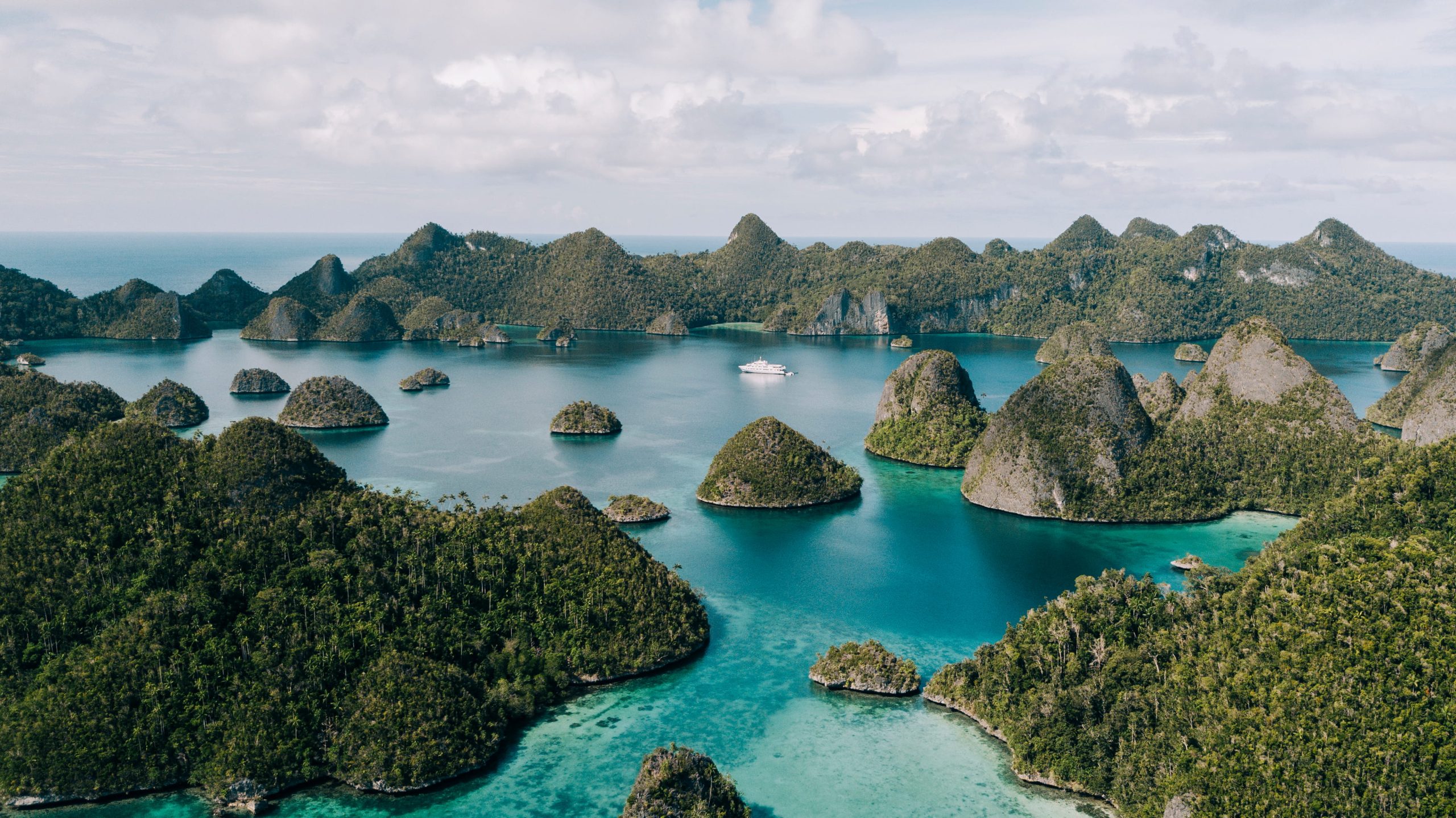
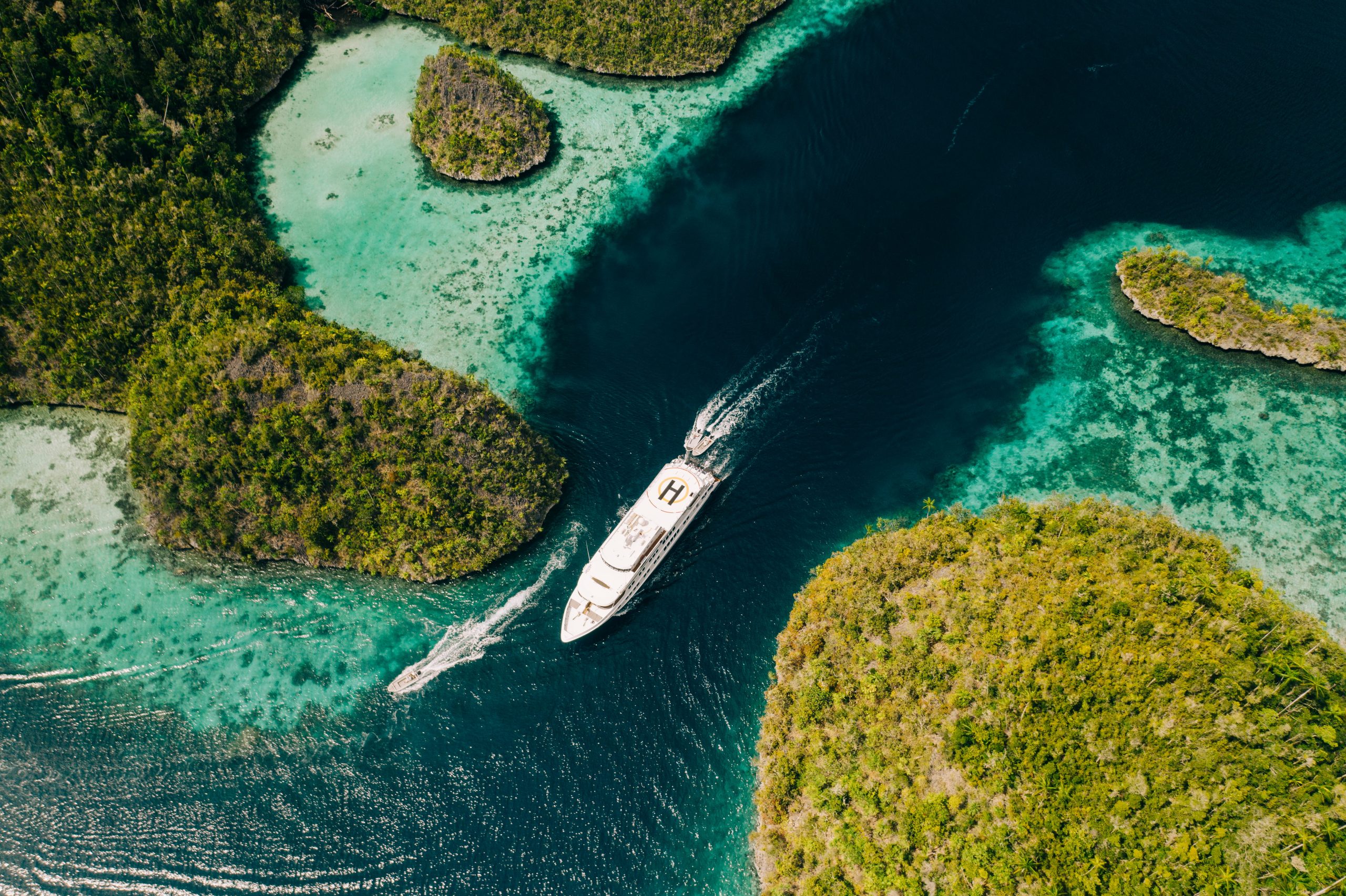
There are no roads between Raja Ampat’s islands. Harbours are minimal. The best sites sit far from the mainland.
That isolation is part of what makes Raja Ampat so remarkable, and what makes access essential. True North’s shallow draft, custom tenders, and small-group format allow guests to reach places that larger ships simply can’t.
Each day’s plan is guided by conditions: tides, light, and wildlife movement. When visibility peaks, you’re diving the outer reef. When the wind shifts, you’re anchored in a sheltered bay. The result is a flexible, responsive expedition where every moment is shaped by place.
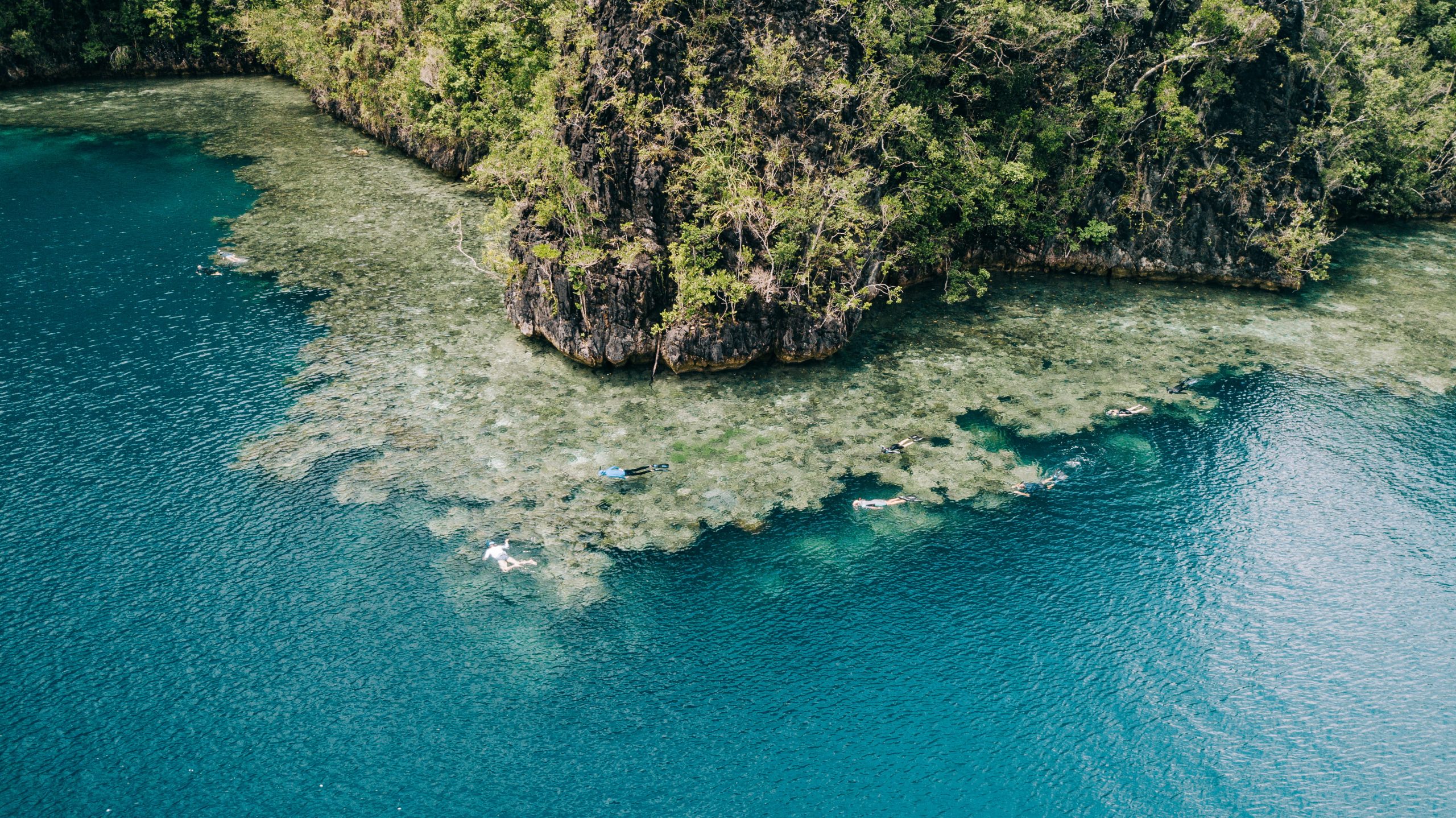
Three to four guided diving sessions each day take you across remote reefs, channels, and coral walls. Highlights include:
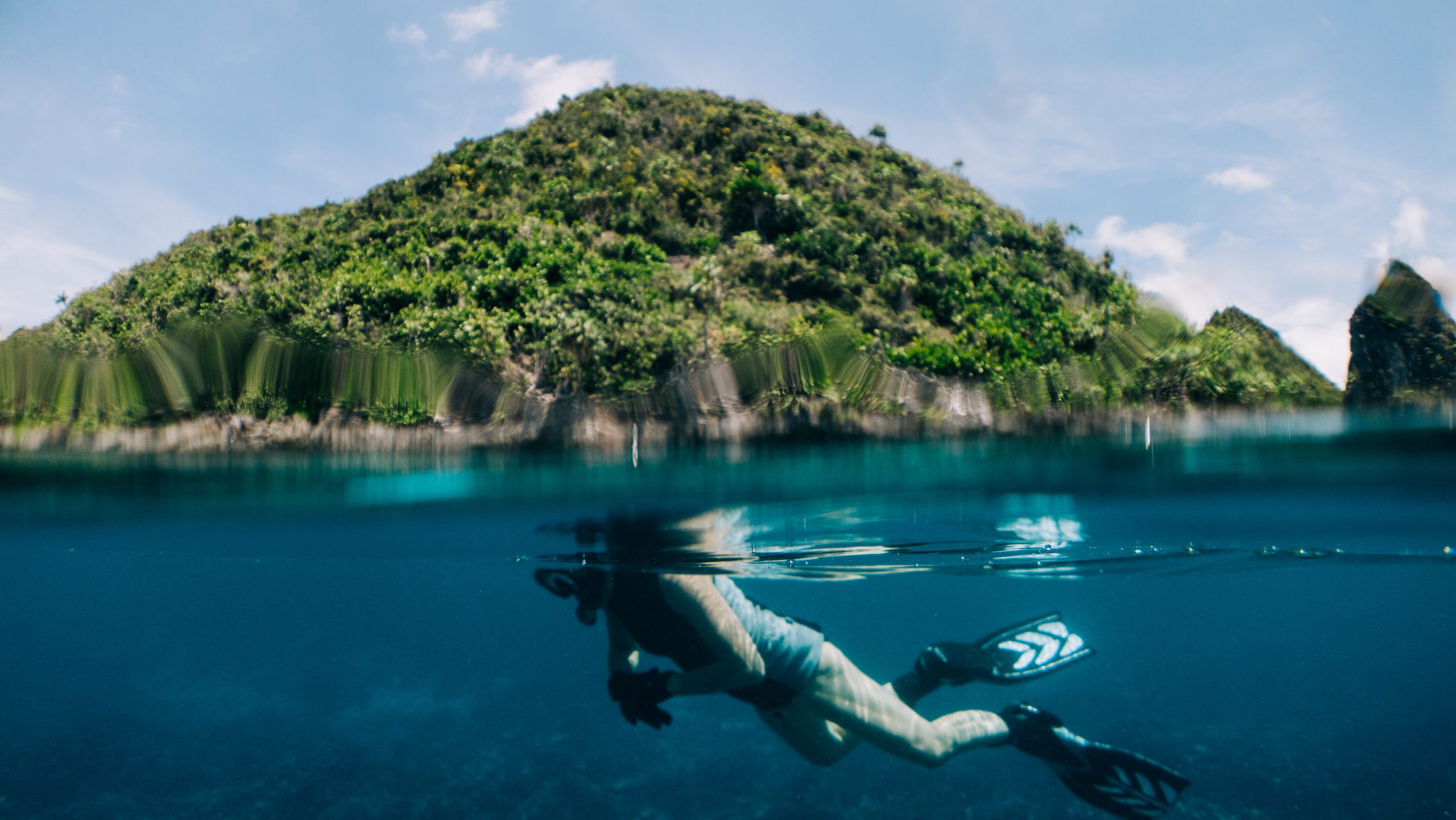
Many reefs begin just metres below the surface, making them ideal for snorkellers as well.
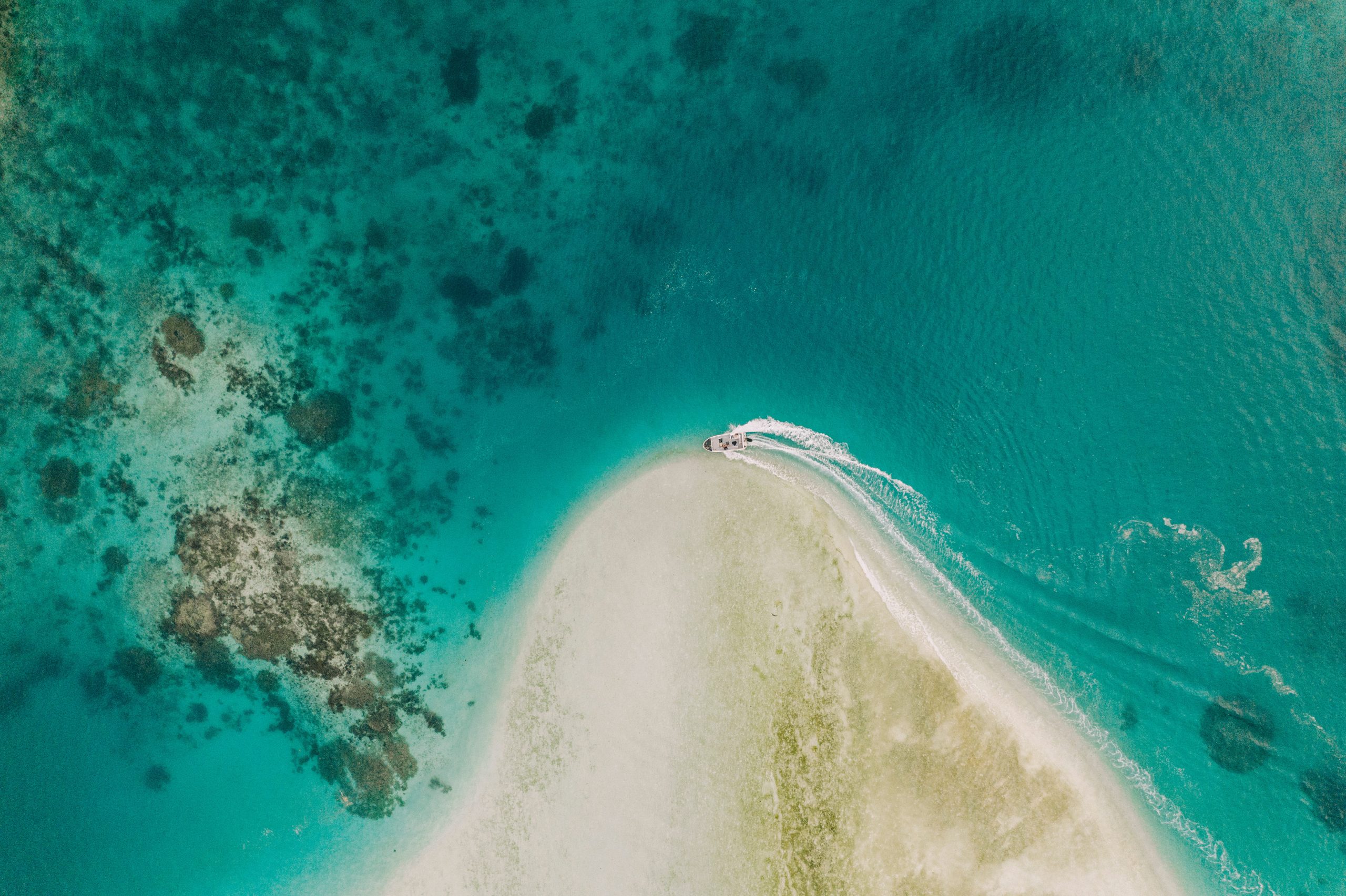
True North’s custom adventure boats and onboard helicopter allow for exploration beyond the reef.
There’s movement, but also space; time to be still, to listen, to watch.
True North’s partnerships with local communities open doors that aren’t available to most.
These are real exchanges, a chance to understand the human story behind the reef.
The dive site is a highlight, but only one part of the greater Raja Ampat story. True North’s itinerary moves through the region’s varied seascapes, from the limestone islets of Misool, through the Dampier Strait’s fast-moving channels, and up to the wild reaches of Waigeo.
Some days centre on diving. Others on forest hikes, village visits, or tranquil anchorages. The itinerary adapts to season and setting, offering a rhythm that’s fluid, intuitive, and always immersive.
This isn’t sightseeing. It’s not a resort week or a casual snorkel from the beach.
Raja Ampat is one of the world’s last truly remote marine sanctuaries; a place of depth, legend, and raw natural beauty. On board True North, you move through it with access, comfort, and purpose.
It’s not just a cruise but a passage through a place few will ever know. To see it for yourself, enquire with our team today.
Is Raja Ampat suitable for beginner divers or snorkellers?
Yes. While the region is famed for advanced sites, many of Raja Ampat’s reefs begin in shallow, protected waters, perfect for snorkellers and newer divers.
When is the best time to visit Raja Ampat?
October to April offers the calmest seas and best underwater visibility. This period also coincides with peak manta ray sightings and fewer crowds in the region’s remote dive zones.
Is Raja Ampat part of a marine protected area?
Yes. Large parts of Raja Ampat, including the Four Kings region, fall within marine protected zones managed by both local communities and conservation bodies. True North operates in partnership with these initiatives.
Is Raja Ampat affected by over-tourism?
No. Strict visitor limits, remote access, and sustainable tourism policies have kept numbers low. Travelling with True North ensures a low-impact approach to these fragile environments.
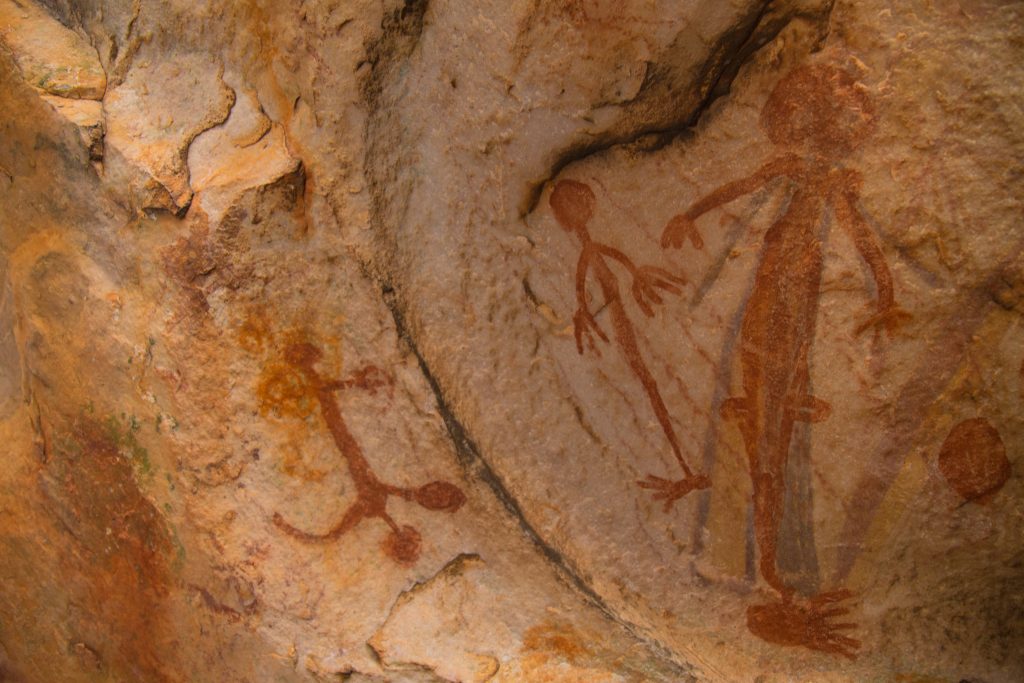
Swift Bay is the kind of place that makes you feel like an explorer. Cliffs tower over the water, rock shelters hide ancient art, and every turn feels like you’re discovering something new.
Read more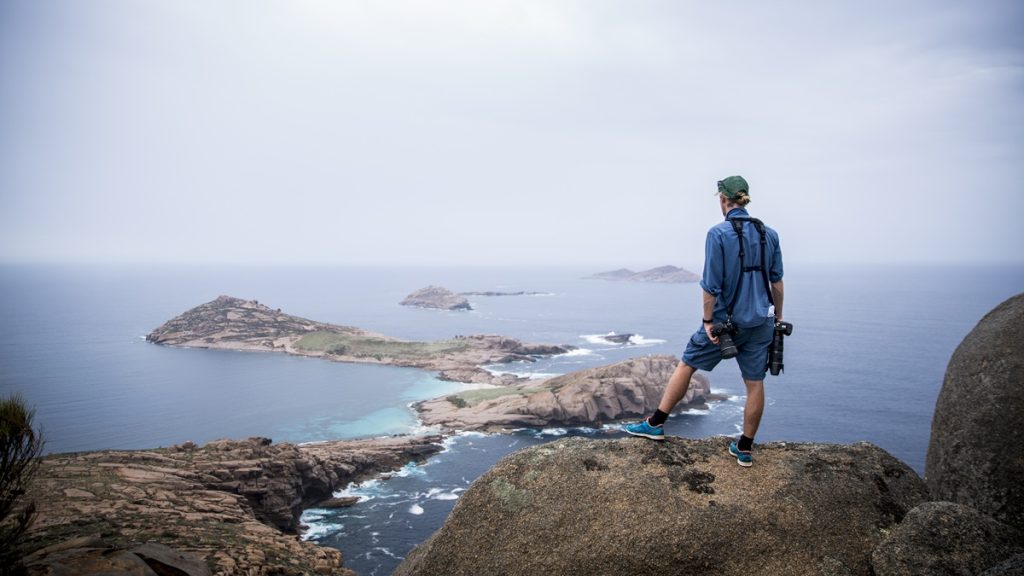
Great photography comes down to access. Being in the right place at the right time with the freedom to move. True North makes that possible.
Read more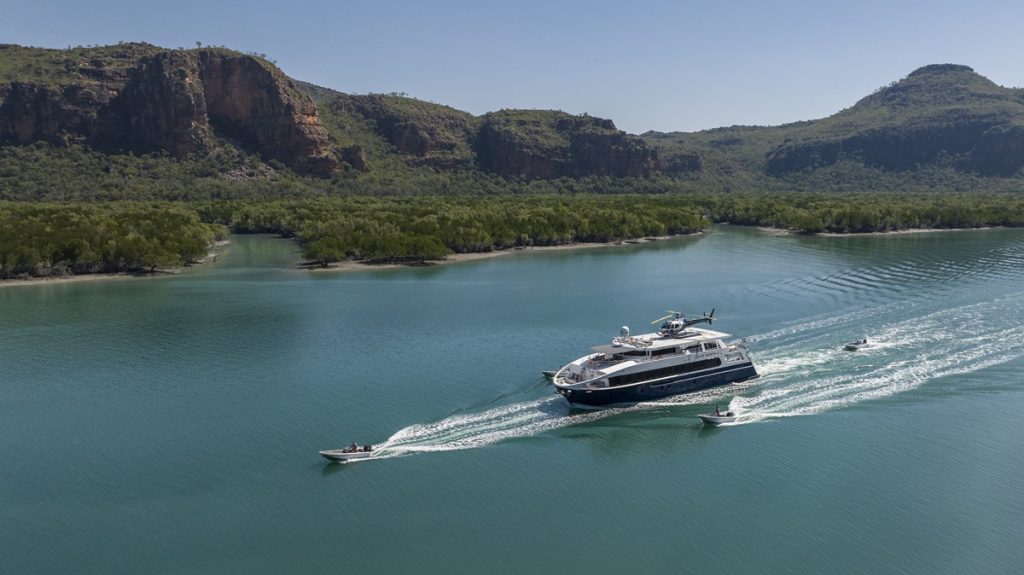
There’s no better way to take in the Kimberley than from the water. Towering cliffs, winding rivers, and waterfalls that spill straight into the sea—it’s all right there, just beyond the deck. The tide sh...
Read more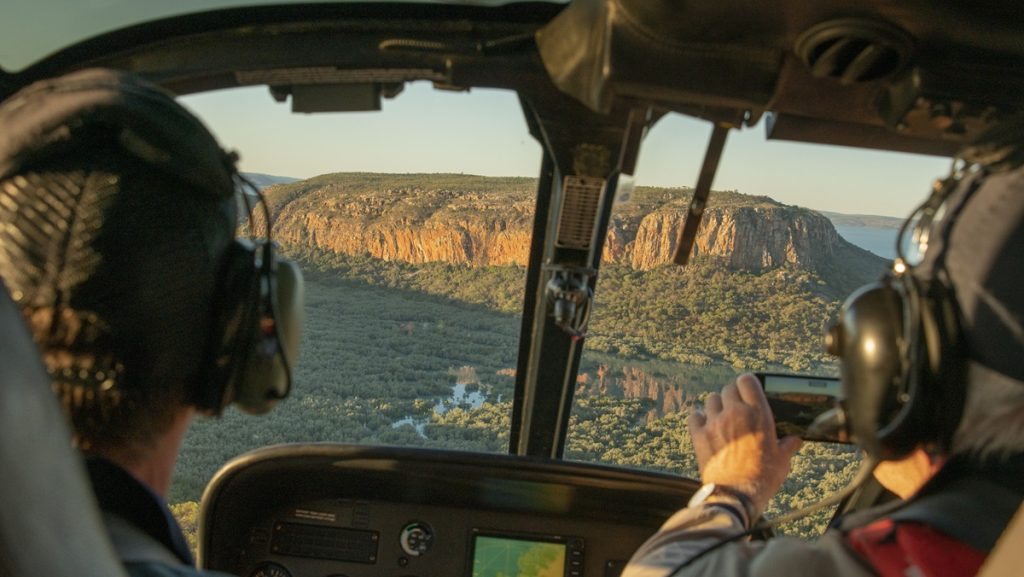
The Kimberley is vast, remote, and largely untouched. Not many people can say they have seen it from the air, but those who have know it offers a completely different perspective.
Read moreMontgomery Reef is one of those places that makes everyone say the same thing what is going on here? One minute, it’s just open ocean. Then, as the tide drops, the water starts rushing away, and this massive ...
Read more